Stucco water damage repair in Gilbert AZ: the signs
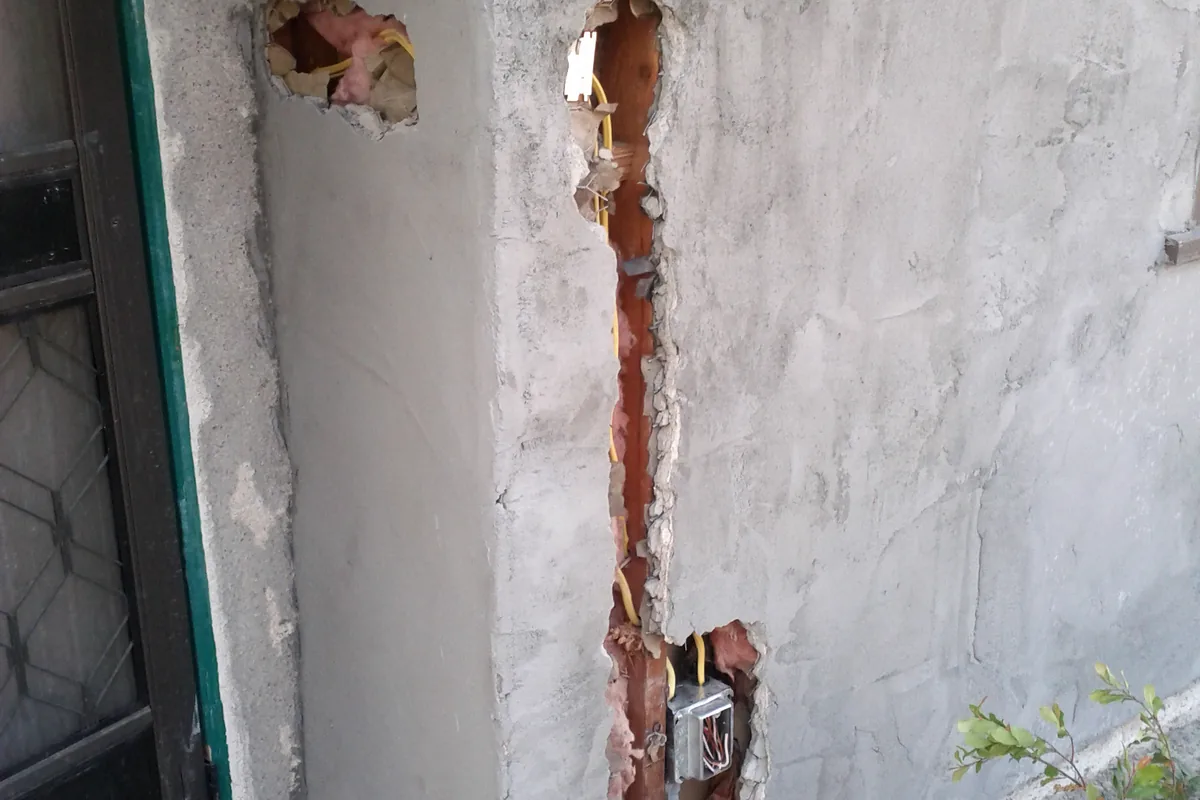
Water damage behind stucco is quiet until it isn't: the wall looks fine for years while paper and lath rot behind it. These are the signs worth acting on:
- Dark patches or streaks that stay after the wall has dried.
- White, chalky salt deposits (efflorescence) below windows, at the base or under a scupper.
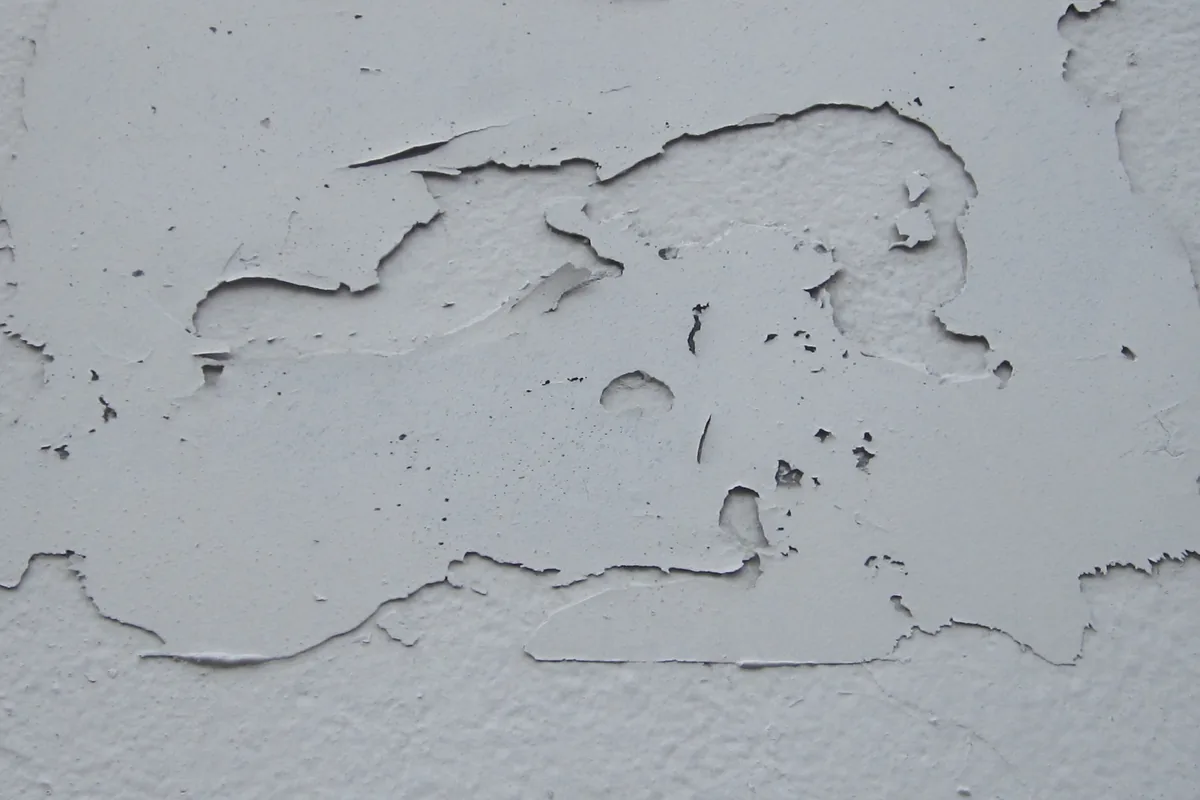
- Paint that bubbles or peels in one area.
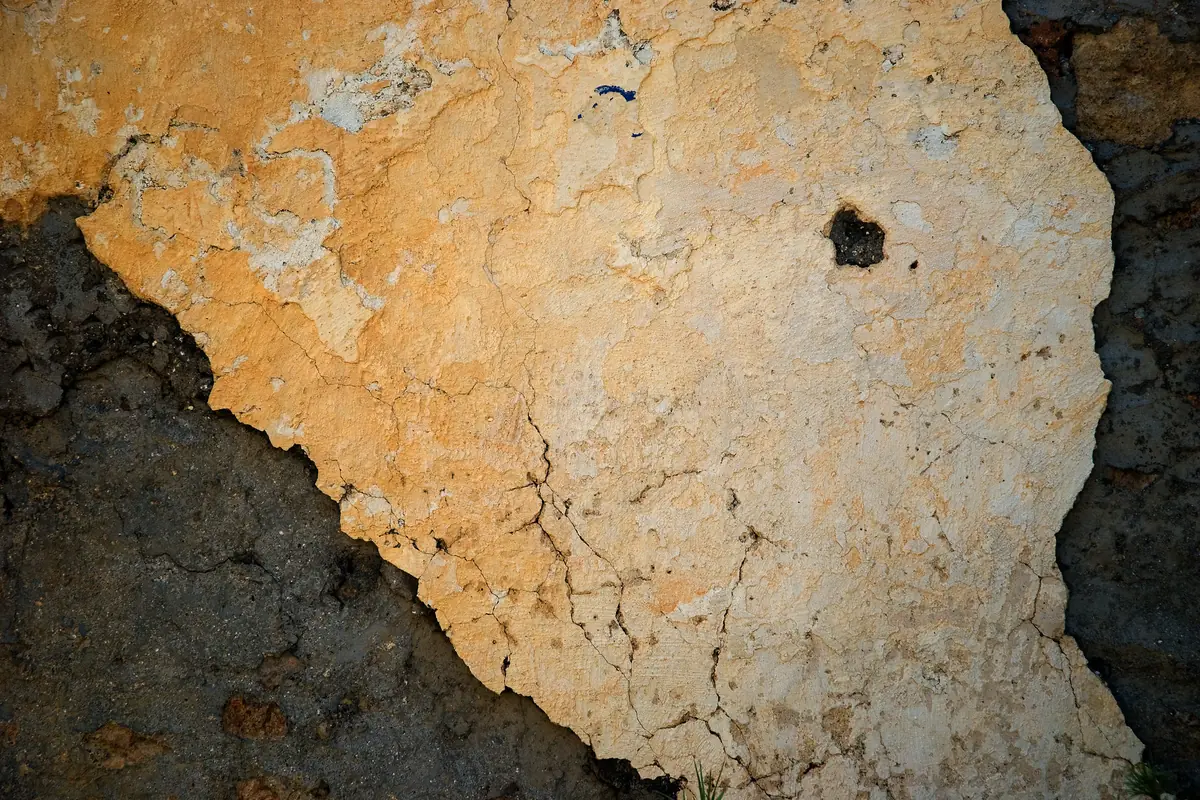
- Stucco that sounds hollow when tapped, gives under a thumb or crumbles.
- Stains, swelling or soft drywall inside on the same wall, often below a window.
- Rust stains bleeding through the finish from the lath or accessories.
Where the water gets in on Gilbert houses
Gilbert is dry most of the year, which is why water damage here usually traces to one point rather than to a whole wall. Phoenix Sky Harbor, the nearest long-record NOAA station, averages 7.22 inches of precipitation a year, and July, August and September bring 2.41 inches of it in monsoon storms that the National Weather Service says carry "damaging winds, torrential rainfall, frequent lightning, and dust storms". Wind-driven rain finds the weak points:
| Where the damage shows | Usual source | Where to read more |
|---|---|---|
| Below a window, spreading from a corner | Window flashing or sealant failure | Stucco around windows page |
| Where a lower roof meets a wall | Missing or failed kick-out flashing | Roof-to-wall flashing |
| Under a parapet, scupper or foam cornice | Water sitting on a flat top or a clogged scupper | EIFS and foam trim page |
| At the base of the wall | Sprinklers, soil or rock over the weep screed | Weep screed 4 in above soil |
| Around a hose bib or wall penetration | A leaking fitting or an unsealed hole | Plumbing first, then patch |
| Across a whole wall after storms | Cracks letting wind-driven rain in | Crack repair and a recoat |
Rainfall: NOAA NCEI 1991-2020 normals, Phoenix Sky Harbor. Monsoon season and hazards: NWS Phoenix. Weep screed height: IRC R703.7.
Sprinklers and the base of the wall
Rain is seasonal; sprinklers aren't. A spray head hitting the wall every morning, or rock and soil heaped over the weep screed, keeps the bottom foot of stucco wet year round. The code places the weep screed at least 4 inches above soil or 2 inches above paving so the wall can drain; a repair restores that clearance, and moving the heads is part of the fix. Block walls get the same damage, covered on the block wall page.
Insurance and water-damaged stucco
Whether insurance helps depends on how the water got in. The Insurance Information Institute says standard policies cover direct losses from windstorms, hail and lightning, exclude flood, and treat seepage and lack of maintenance as the owner's job. In Gilbert terms: a monsoon microburst that rips off foam trim or a fallen tree that breaks a wall can be a claim; a window that has leaked slowly for three summers usually isn't. Photograph the damage before it's opened up, and ask your agent before the wall is rebuilt.
How water-damaged stucco is repaired
- 1Trace the water
Stains, soft spots and hollow areas are mapped against what's above them: windows, roof-to-wall joints, parapets, scuppers, hose bibs and sprinkler heads.
- 2Open the wall to dry material
The stucco is cut back until the paper, lath and sheathing behind it are dry and sound, and the full extent of the damage is photographed.
- 3Replace what's wet
Rotted sheathing or framing goes to a carpenter; torn or saturated paper is replaced and lapped under the paper above it, and rusted lath comes out.
- 4Fix the entry point
Window flashing, kick-out flashing at roof lines, parapet caps or the weep screed are repaired so the water that got in this time can't get in again.
- 5Rebuild and refinish
New lath and three coats go back on, the texture is matched, and the panel is refinished so the repair doesn't show.
If the wall is EIFS rather than cement stucco, water behind it behaves differently; see the EIFS and foam trimpage. For how a normal year's heat and storms age a wall, see the stucco lifespan guide.