Stucco crack repair in Gilbert AZ: which cracks matter
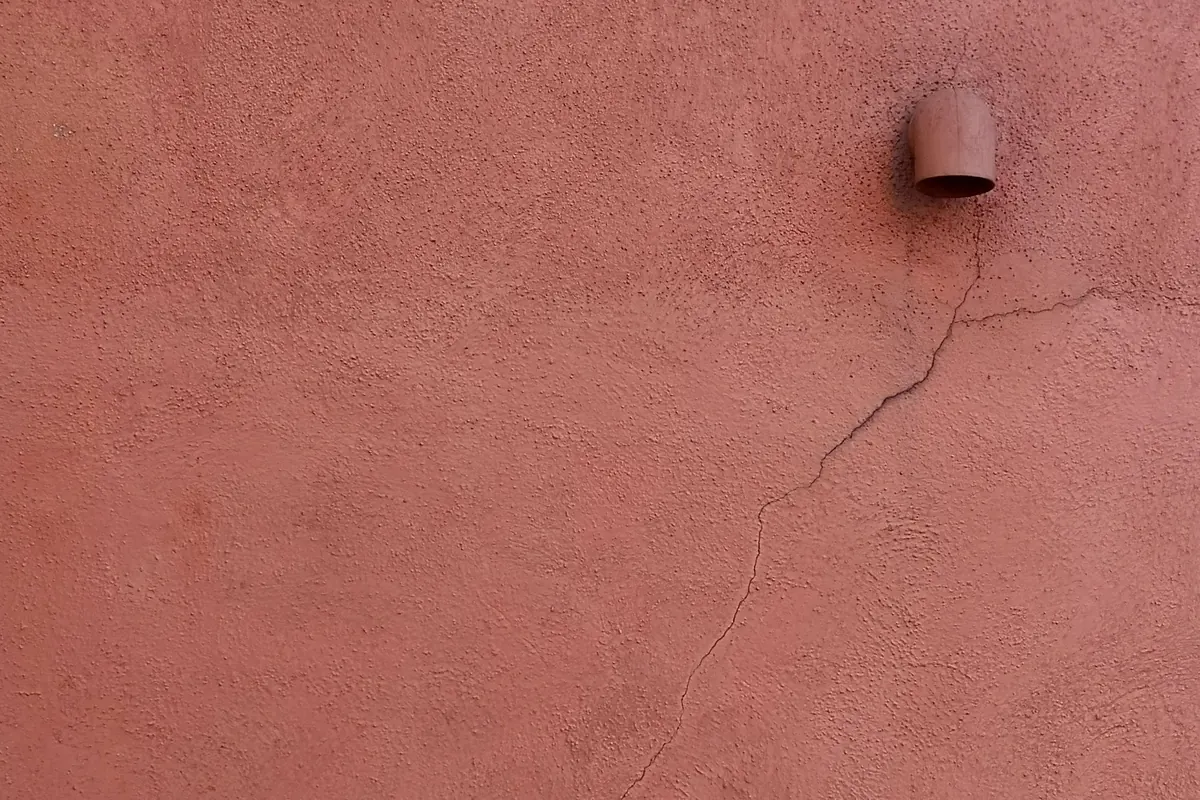
Most stucco cracks are not a problem, and the ones that are tell you so by their width, their shape and what's around them. Cement stucco is a brittle membrane 7/8 inch thick on a framed wall, and the Technical Services Information Bureau lists the stresses that crack it: shrinkage as it sets, settlement, wind, framing that shrinks or swells, and thermal expansion and contraction. Gilbert adds a big dose of the last one: walls that bake past 100°F on 111 days of a normal year and cool off every night.
| What you see | Likely cause | Usual repair |
|---|---|---|
| Hairline, 1/32 in or less | Shrinkage as the stucco set, thermal movement | Usually leave it; if it bothers you, a breathable coating over the whole panel |
| Craze or map cracking (a web) | Finish coat dried too fast when it was applied | Cosmetic; a recoat or fog coat over the wall |
| Diagonal from a window or door corner | Re-entrant stress at the opening | Rout, bond, fill and refinish the panel; check the window flashing |
| Straight line across a wall | No control joint, or framing joint behind it | Rout and fill, or cut in a control joint |
| Wide, with one edge offset from the other | Settlement or framing movement | Find the movement first, then cut out and rebuild |
| Crack with stains or soft stucco | Water behind the wall | Open it up: it's a water repair, not a crack repair |
Crack types and causes from TSIB Technical Bulletin 60.101 (February 2021) and WCC Technical Bulletin 6.002 (November 2019); hairline width from WCC. Heat days: NOAA 1991-2020 normals, Phoenix Sky Harbor.
The window-corner crack on Gilbert houses
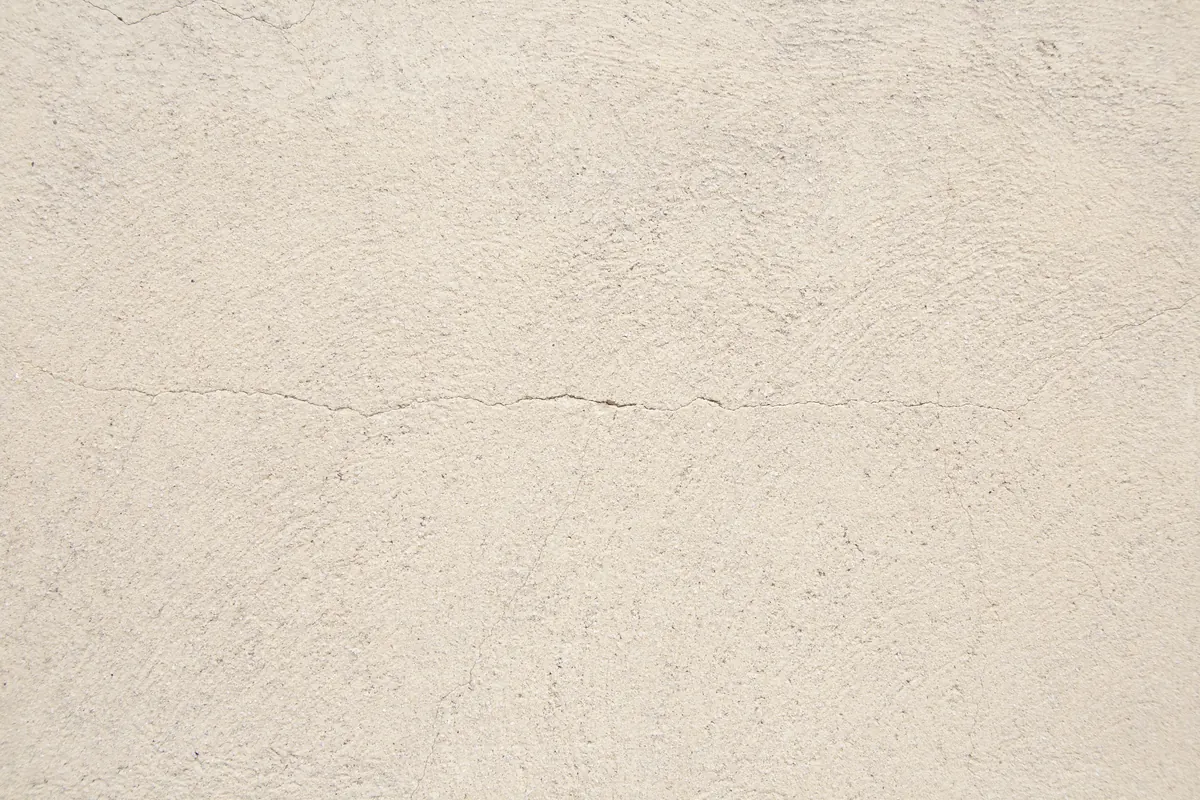
The diagonal crack that runs up and out from a window corner is the single most common stucco crack, and both crack bulletins name it: a re-entrant crack, where stress concentrates at the corner of an opening. The standard defense is a control joint at those corners. ASTM C1063, the lath and accessory standard, limits a wall panel to 144 square feet with no more than 18 feet between joints, but many Southwest-style houses leave the joints out for a cleaner look, so the wall picks its own crack lines.
A window-corner crack is also where water gets in when the window's flashing has failed, which is why the repair starts by checking for stains and soft stucco below the sill. If a window was recently replaced, the stucco around windows page covers the patch-and-flash job.
When a crack is really a water problem
Dark lines that stay after a rain, white salt bloom, bubbling paint or stucco that crumbles at the crack all mean water is moving through the wall. Closing that crack without opening the wall traps the water. That job belongs on the stucco water damage repair page.
How a stucco crack is repaired
- 1Measure and map
Each crack is measured against a 1/32 inch gauge, followed to its ends, and checked for offset, dampness and hollow stucco on either side.
- 2Fix the cause where there is one
A sprinkler soaking the wall, a gutter dumping at a corner or a window with failed flashing gets dealt with before the crack is closed, or it reopens.
- 3Open the crack
Cracks wider than a hairline are routed or tooled out to sound edges so the repair has something to grip, and the dust is cleaned out.
- 4Bond and fill
A bonding agent goes on, then a stucco slurry or patching mix, built in layers on deep cracks; through-cracks get a mesh patch first.
- 5Refinish the panel
The finish texture goes over the repair and the whole panel, from joint to joint or corner to corner, gets a new coat so the line doesn't show.
The last step matters as much as the fill. WCC's bulletin says to refinish the entire panel after a crack repair "to prevent the appearance of a scar", and to paint a whole panel, not a strip, if paint is used. A repaired crack with a fresh stripe of texture across an old wall reads as a repair from the street; the same repair under a new panel coat doesn't. In an HOA community, check the HOA color rules before that coat goes on.
Cracks, heat and when to repair
Cracks open in summer and close a little in winter as the wall expands and shrinks, so a repair made in the cool season is tested by the first July. The patching material has to bond, not just sit in the gap, and new stucco has to be kept from drying too fast: ASTM C926 calls for protecting cement plaster from "uneven and excessive evaporation during dry weather and from strong blasts of dry air", with misting more often when it's hot, dry and windy. The stucco lifespan guide covers the seasonal pattern.