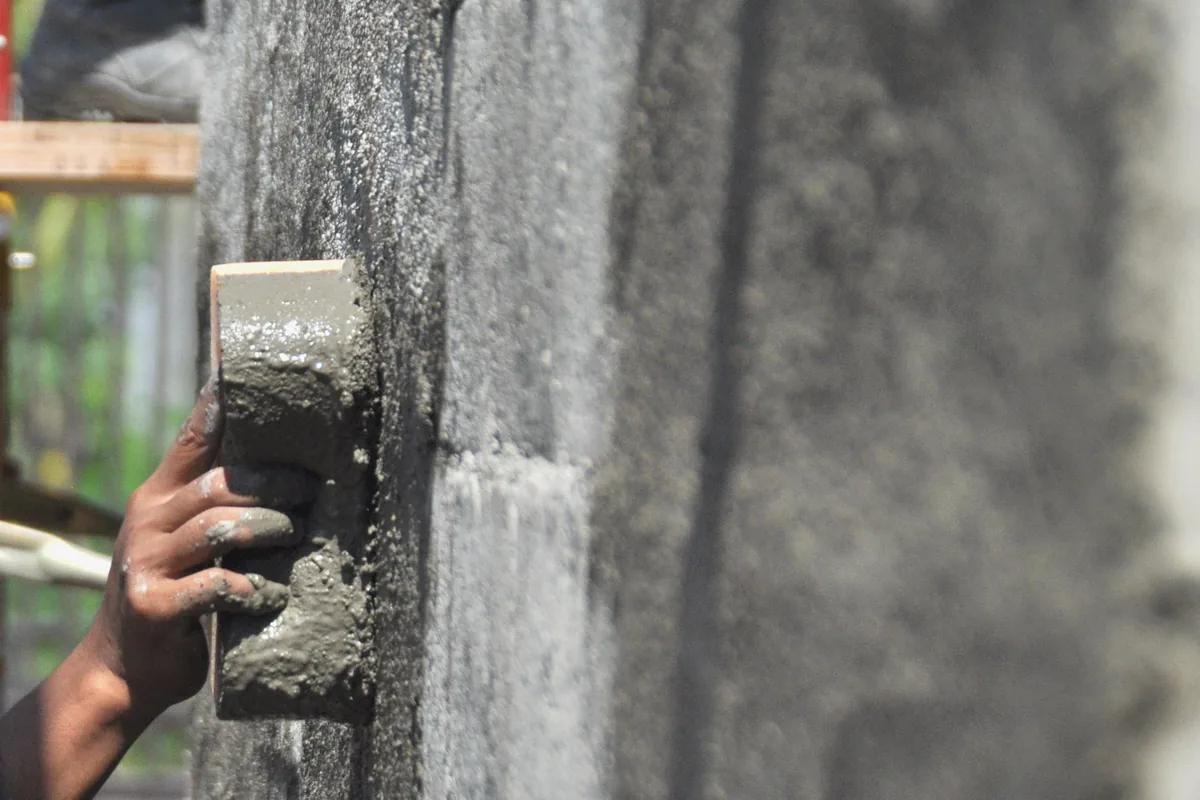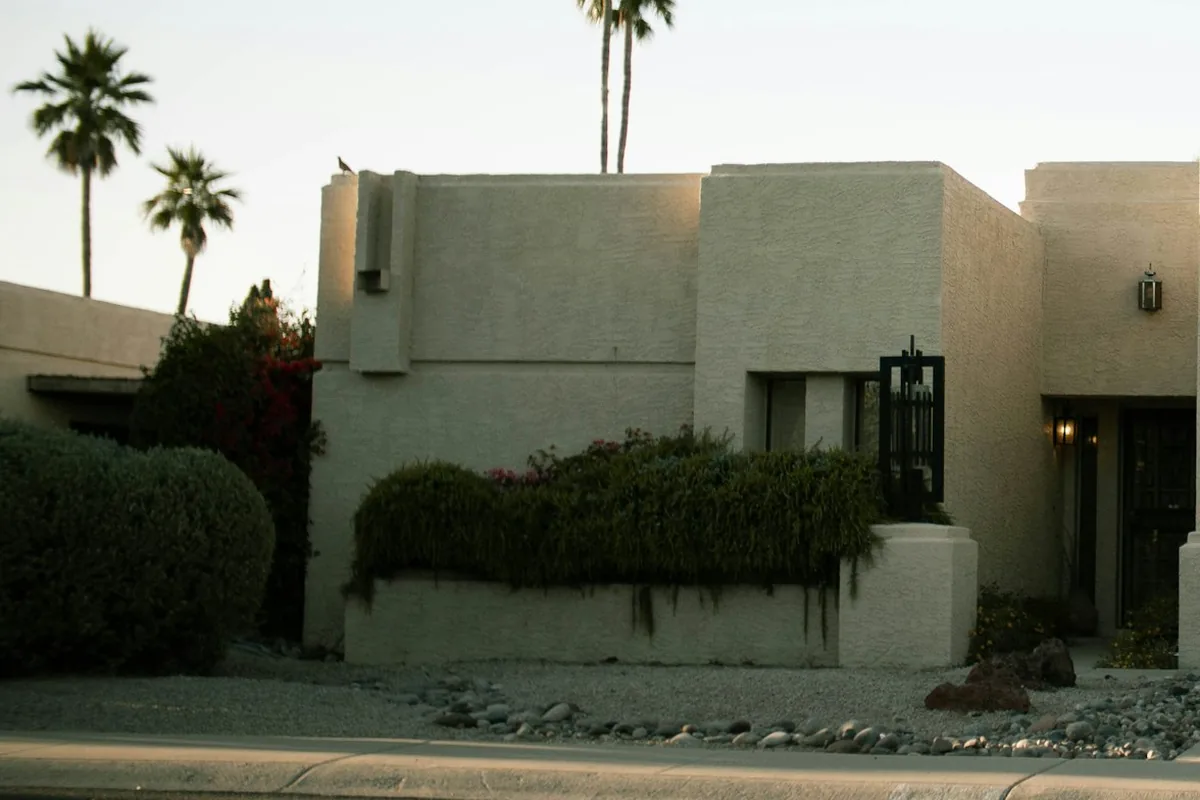
Stucco block wall work in Gilbert AZ
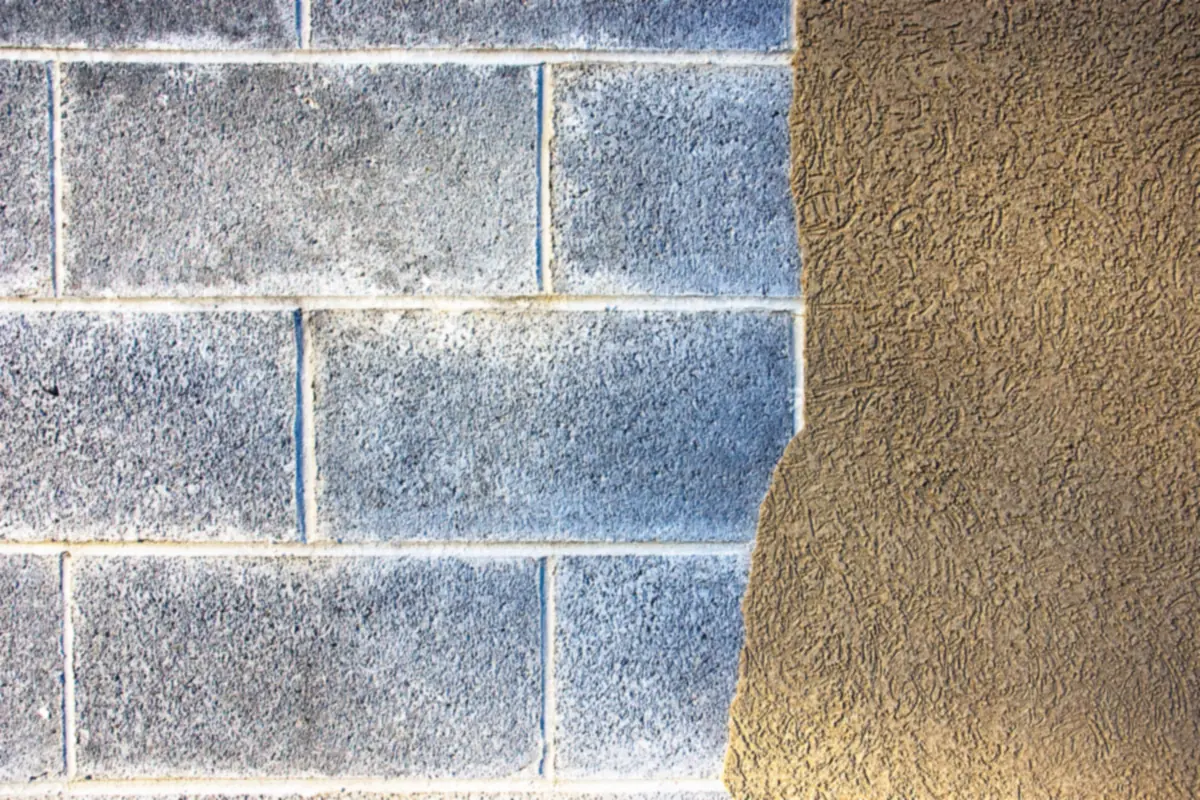
Gilbert yards are walled with concrete block, and a lot of that block is bare on the yard side, painted years ago, or stuccoed with a finish that has worn through at the base. Stucco over block is a solid-base job: no paper and no lath, just the plaster bonded straight to the block, which makes it thinner and simpler than stucco on a framed house. The common jobs:
- Stucco on the yard side of bare block garden and perimeter walls.
- Courtyard and entry walls finished to match the house.
- Pool equipment and AC screen walls, which some HOAs require to match the home's texture.
- Repairs to cracked, crumbling or stained stucco at the base and cap of existing walls.
- Recoats of faded block wall stucco in a community's approved color.
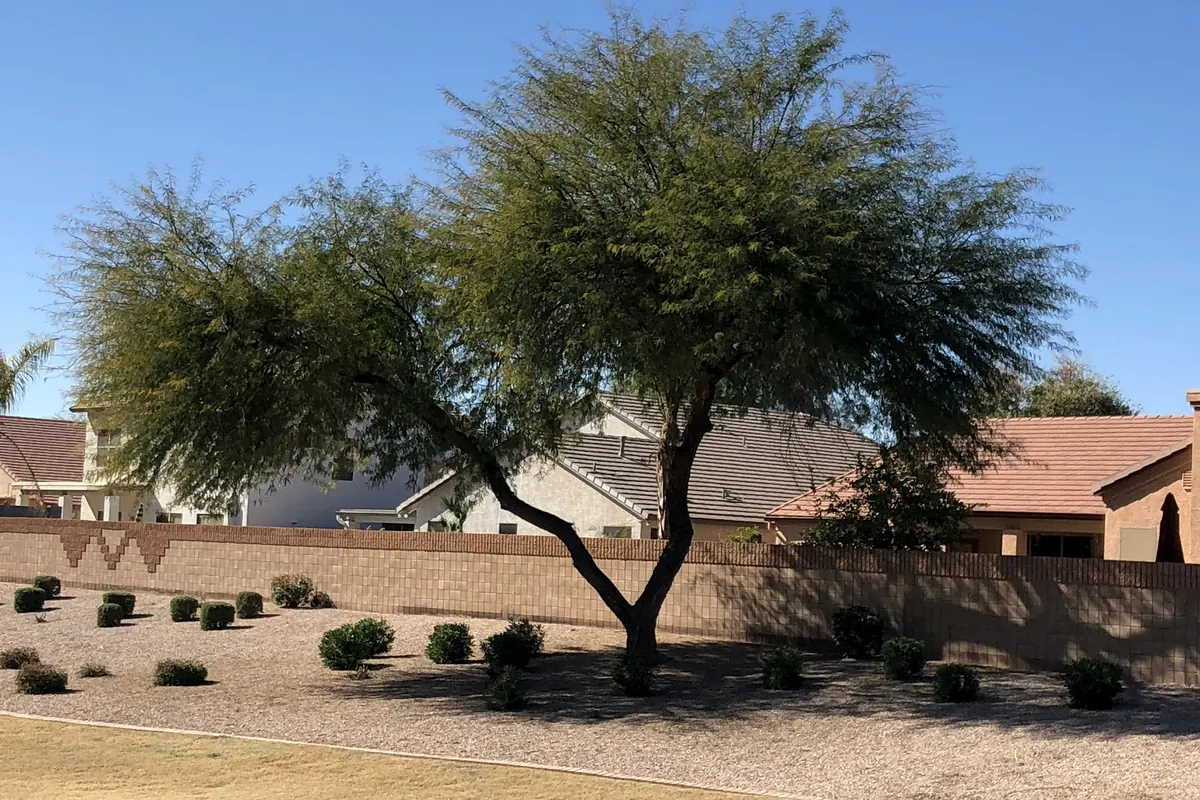
How thick stucco on a block wall is
ASTM C926, the standard for applying cement plaster, sets thinner coats over masonry than over lath, because the block does the work the lath does on a framed wall:
| System | Coats | Total |
|---|---|---|
| Two-coat over block | 3/8 in base + 1/8 in finish | 1/2 in |
| Three-coat over block | 1/4 in + 1/4 in + 1/8 in finish | 5/8 in |
| Three-coat over lath (painted or furred block) | 3/8 + 3/8 + 1/8 in | 7/8 in |
ASTM C926-20a, Table 4 (vertical work). The IRC (R703.7) calls for at least two coats over masonry or concrete.
Getting stucco to stick to block
Bond is the whole game on a solid base. ASTM C926 says the masonry must be straight and true within 1/4 inch in 10 feet, free of anything that interferes with bonding, and have enough suction or roughness to hold the plaster. Smooth or dense surfaces get wire-brushed, sandblasted or acid-etched, a dash-bond coat thrown on and moist-cured for at least 24 hours, or a bonding compound; where none of that works, lath goes on. Paint is the usual problem: painted block won't bond until the paint is gone.
HOA rules for block walls in Gilbert
Gilbert's HOAs care about walls as much as houses. Power Ranch's 2025 guidelines allow no alterations to builder walls without design review approval, require decorative walls to be "stucco and painted", wood or stone, and require rear, side and patio walls to be masonry, stucco or wrought iron that match what's there; pool equipment screens must "match as closely as possible the design, color and exterior texture of the home". Morrison Ranch lists painted slump block and split-face block among its main exterior surfaces. The HOA stucco color guide covers the color side.
How a block wall is stuccoed
- 1Check the wall and the approvals
The wall is checked for cracks through the block, lean and loose caps; in an HOA community the stucco, texture and color go to the design review committee first.
- 2Clean and open the surface
Dirt, efflorescence and anything that blocks bond come off. Painted or sealed block is ground or blasted, or covered with lath, because paint stops stucco from gripping.
- 3Bond coat or dampen
Absorbent block is dampened so it doesn't pull water from the plaster; smooth or dense block gets a dash-bond coat or a bonding compound first.
- 4Base and finish coats
Two coats (about 1/2 inch) or three (about 5/8 inch) go on, the last in the texture that matches the house or the community's walls.
- 5Cap and cure
The top of the wall is shaped to shed water, the base is kept clear of soil and sprinkler spray, and the stucco is misted while it cures.
Building a new wall or adding height is masonry work and a permit question; the Gilbert stucco permit guideexplains where the line falls. Stucco on new walls tied to the house, such as a casita's courtyard, is on the new stucco page.