Stucco patch repair in Gilbert AZ: what can be patched
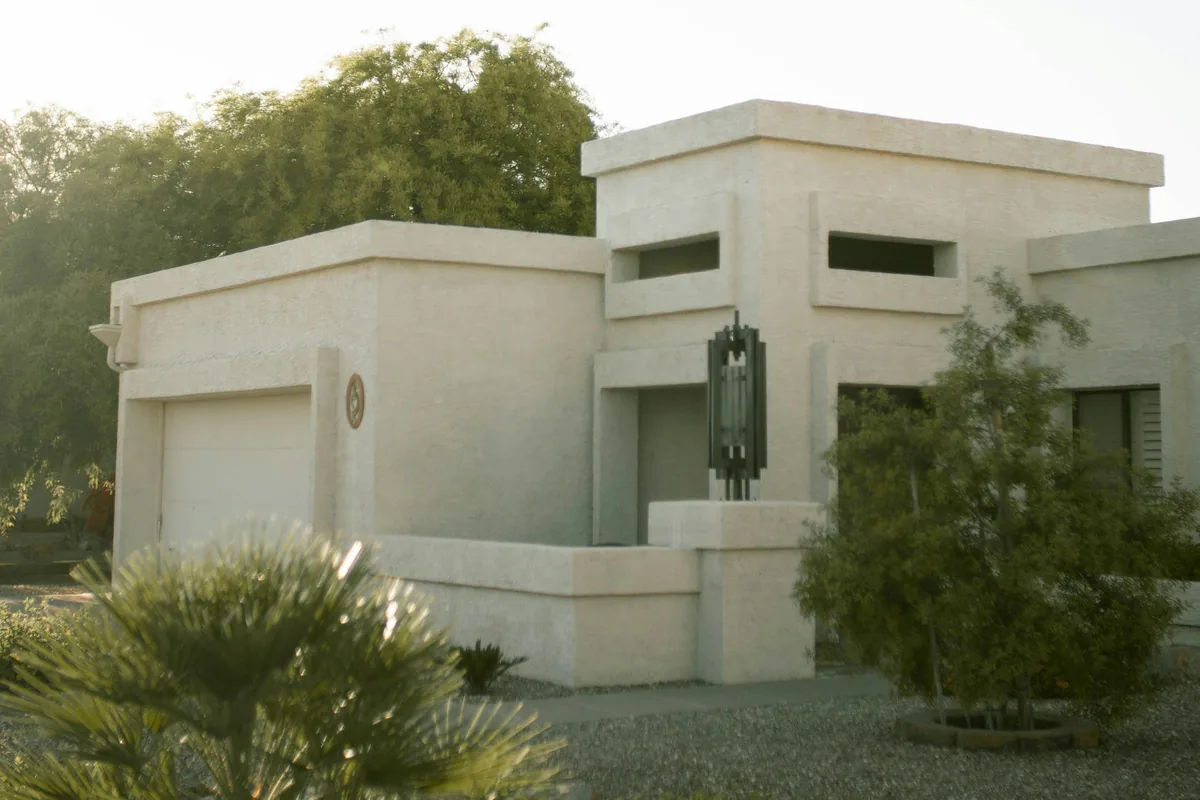
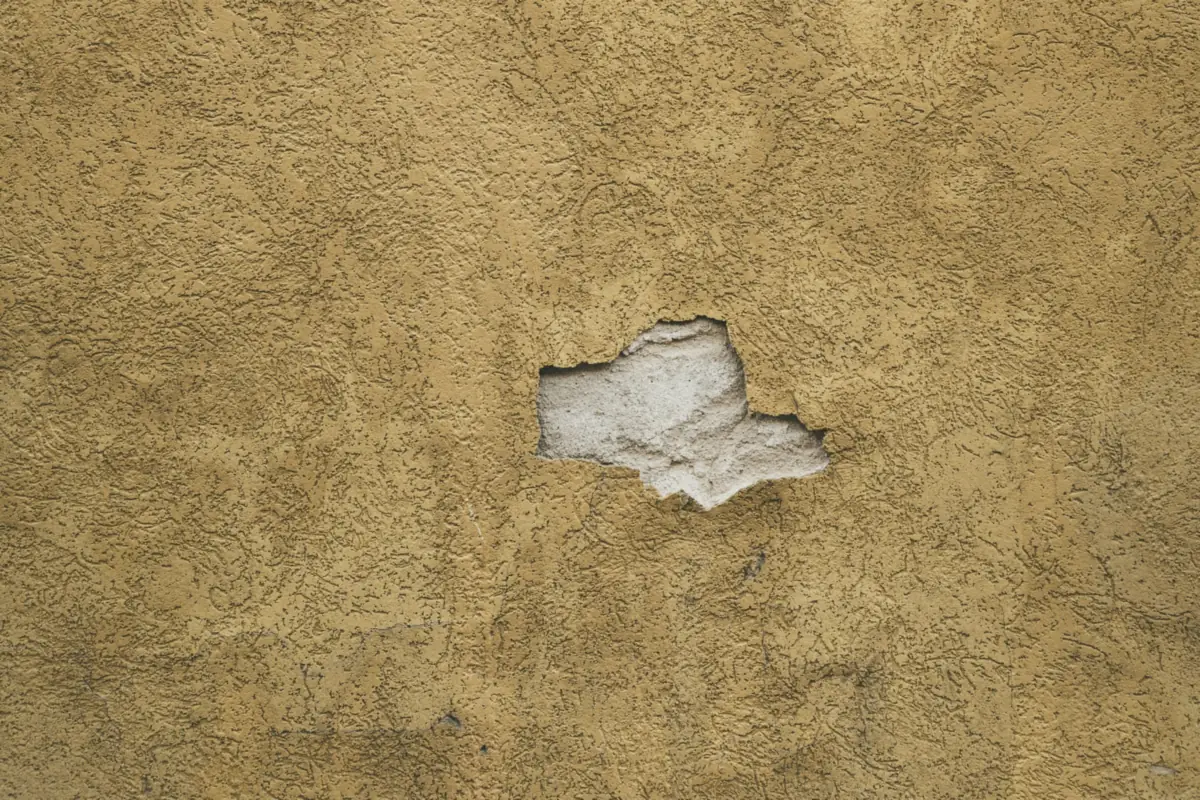
Almost any hole or damaged spot in cement stucco can be patched, as long as the paper and lath behind it are repaired too. The common Gilbert patches: the bolt holes where a satellite dish or a security camera came down, a dented corner where a car or a mower hit the garage, a soft area under a hose bib, the opening left by a removed vent or meter, and old patches with the wrong texture.
Patch or something bigger?
If the area around the hole sounds hollow when tapped, the stucco has let go of the lath and the patch grows to the edge of the hollow area. Stains or crumbling around it mean water, which is a water damage repair, and a long crack leading to it is a crack repair.
Stucco texture matching
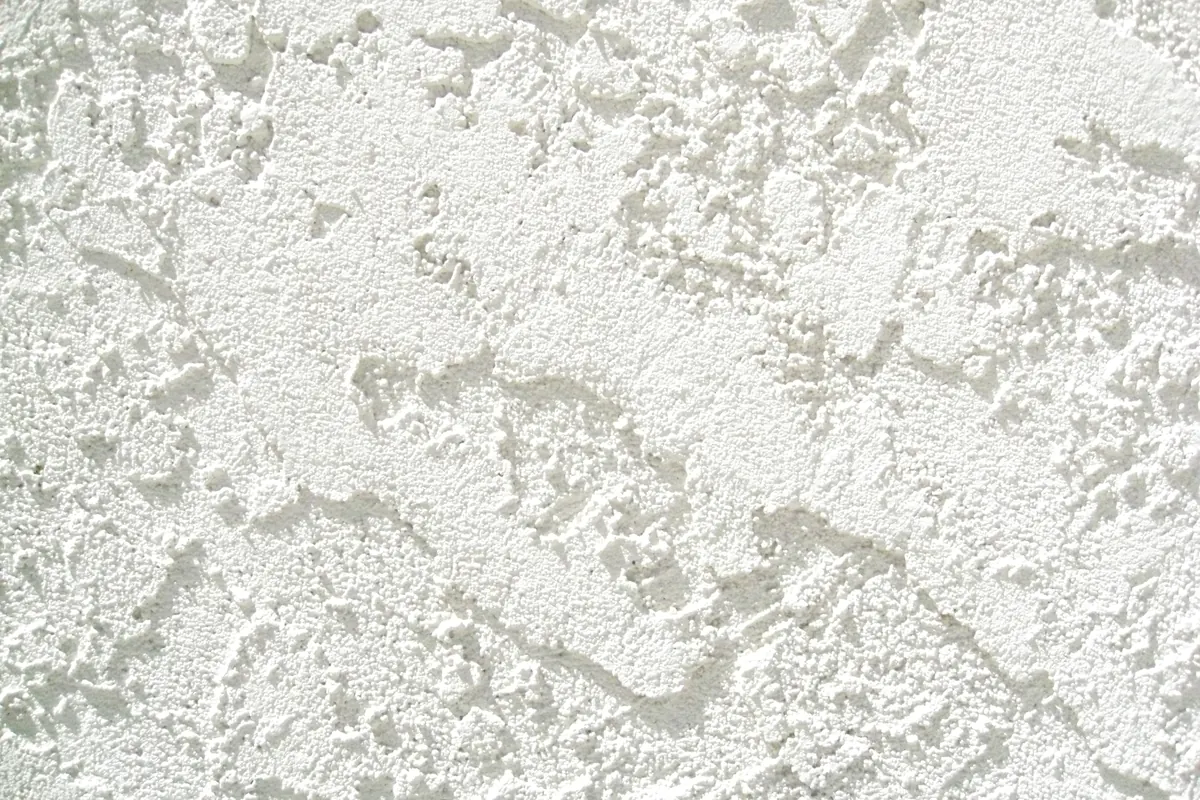
A patch is judged by its texture first and its color second. The texture comes from the finish coat and the tool that applied it, so matching it means using the same material and the same motion as the original plasterer:
| Texture | What it looks like | Matching it |
|---|---|---|
| Sand (float) finish | Even, fine grain worked with a float | The easiest finish to blend a patch into |
| Light lace / Spanish | Flattened splatters with smooth valleys | Hand-troweled; the pattern size has to match |
| Dash (machine dash) | Rough, sprayed peaks | Sprayed with a hopper gun; overspray protection needed |
| Smooth / Santa Barbara | Hand-troweled, slightly wavy and dense | Hardest to hide a patch in; often a full-panel refinish |
| Acrylic (synthetic) finish | Uniform grain, slightly rubbery feel | Matched with acrylic, not cement; common on EIFS and foam trim |
Texture names as used by stucco makers (LaHabra lists float, light Spanish and machine dash finishes and a separate smooth Santa Barbara Mission finish). Which texture a given house has varies by builder.
How much finish material a patch takes
Finish coats go on thin, so a bag covers a fair amount of wall. LaHabra's data sheet for its exterior color coat gives these coverages for a 90 lb bag; the right-hand column is the same rate scaled to a 50 lb bag:
| Texture | Per 90 lb bag (maker) | Per 50 lb (our scaling) |
|---|---|---|
| Float (sand) finish | 135 to 180 sq ft | 75 to 100 sq ft |
| Light Spanish (lace) | 90 to 135 sq ft | 50 to 75 sq ft |
| Machine dash | 72 to 108 sq ft | 40 to 60 sq ft |
LaHabra Exterior Stucco Color Coat product data (Parex USA): approximate coverage per 90 lb bag at about 1/8 inch. Scaled linearly to 50 lb. Base coats are about 3/8 inch each, so they cover roughly a third as much.
Making the color match
Fresh cement stucco dries lighter over days and weathers for years, so a patch is never the same color as a 20-year-old wall the day it goes on. The trade answer is to refinish the panel: the WCC's crack bulletin advises refinishing the entire panel to prevent a scar, and painting a whole panel rather than a patch. On a cement finish that means a color coat or fog coat; on a painted wall, paint corner to corner. In HOA communities the color comes from the approved scheme, and Power Ranch's palette notes that its chip colors "should not be used for touch-up purposes", so match to the wall, not the chip. The HOA color guide has more.
How a stucco patch is done
- 1Square up the hole
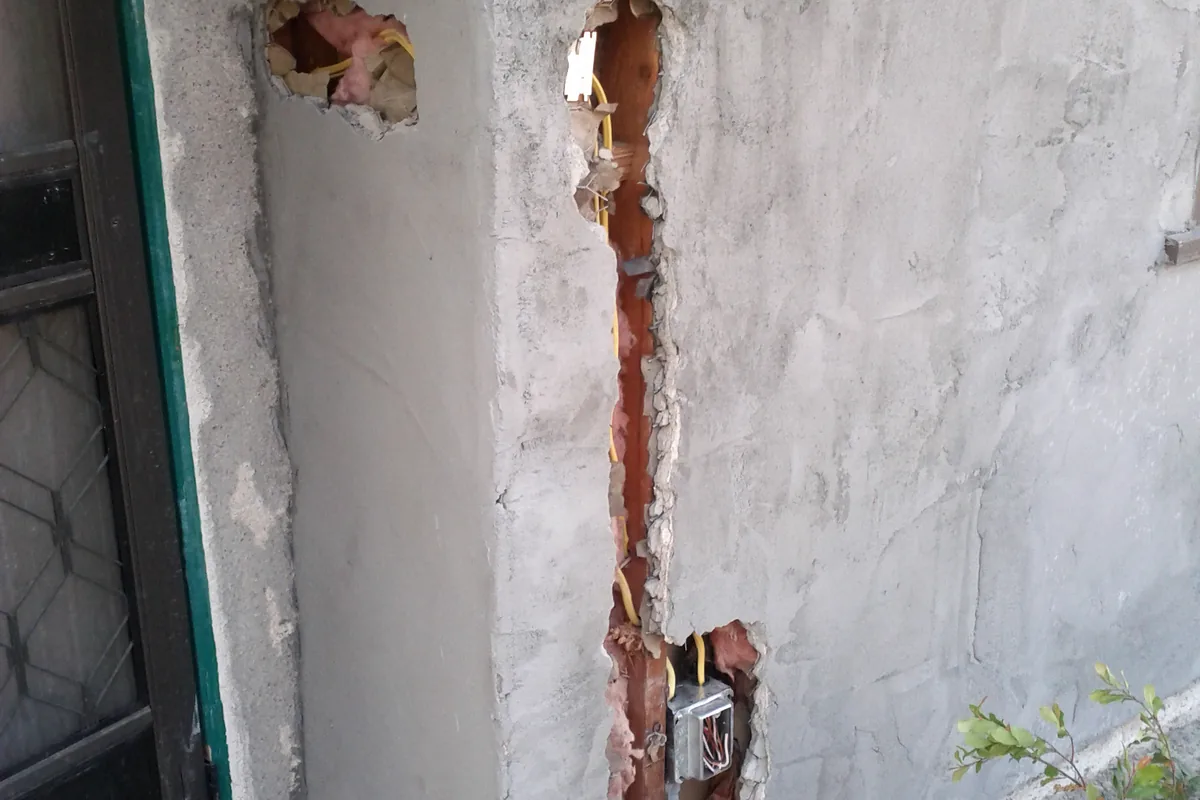
Loose and cracked stucco around the damage is cut back to a sound edge, so the patch has solid stucco on every side.
- 2Repair the backing
Torn building paper is patched and lapped so water still runs down and out, and missing or rusted lath is replaced and fastened.
- 3Build the base coats
Scratch and brown coats are applied in layers, each pressed in and allowed to firm up, until the patch sits a finish-coat thickness below the wall.
- 4Match the texture
The finish coat is applied with the same tool and motion as the wall around it: a float for sand finish, a trowel for lace, a hopper gun or brush for dash.
- 5Blend the color
Once cured, the patch and its panel are coated so the color runs unbroken from one corner or joint to the next.