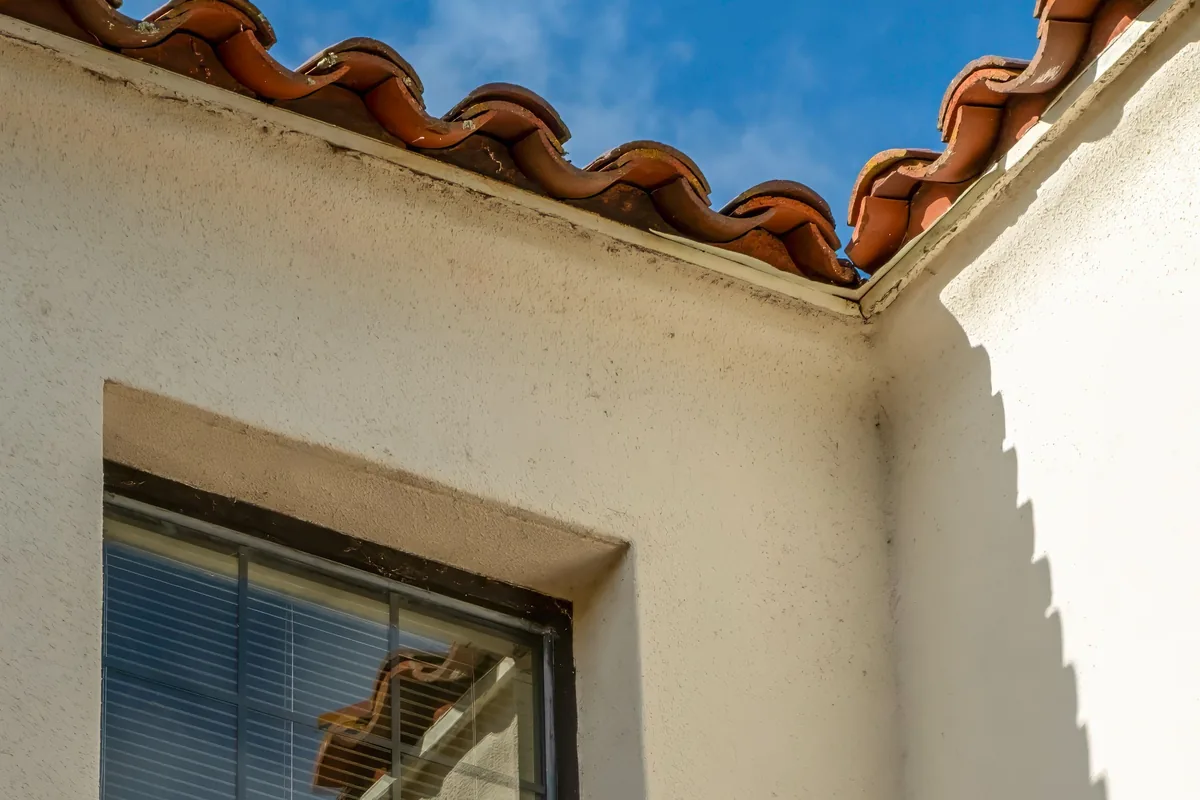
Stucco repair around windows in Gilbert AZ
Windows are where stucco walls are weakest: the wall changes material, stress collects at the corners, and water running down the wall meets the frame. Most Gilbert window-and-stucco work is one of these jobs:
| Job | What happens to the wall | Stucco work |
|---|---|---|
| Insert (retrofit) replacement | New window fits inside the old frame; stucco usually untouched | Seal the joints; patch any chips |
| Full-frame replacement | Old window removed with its fin; stucco cut back around the opening | Patch band, lapped flashing, coats and finish |
| New or enlarged opening | Wall cut for a new window or a bigger one | New opening, flashing, lath and coats; a structural and permit question too |
| Corner cracks at an old window | Re-entrant cracks from the corners | Crack repair; check flashing for leaks |
| Foam trim band around the window | Cracked or soft band | Foam trim repair, then reseal |
Corner-crack guidance: TSIB Technical Bulletin 60.101 and WCC Technical Bulletin 6.002. Whether a given window job needs a Town permit: ask Gilbert Development Services.
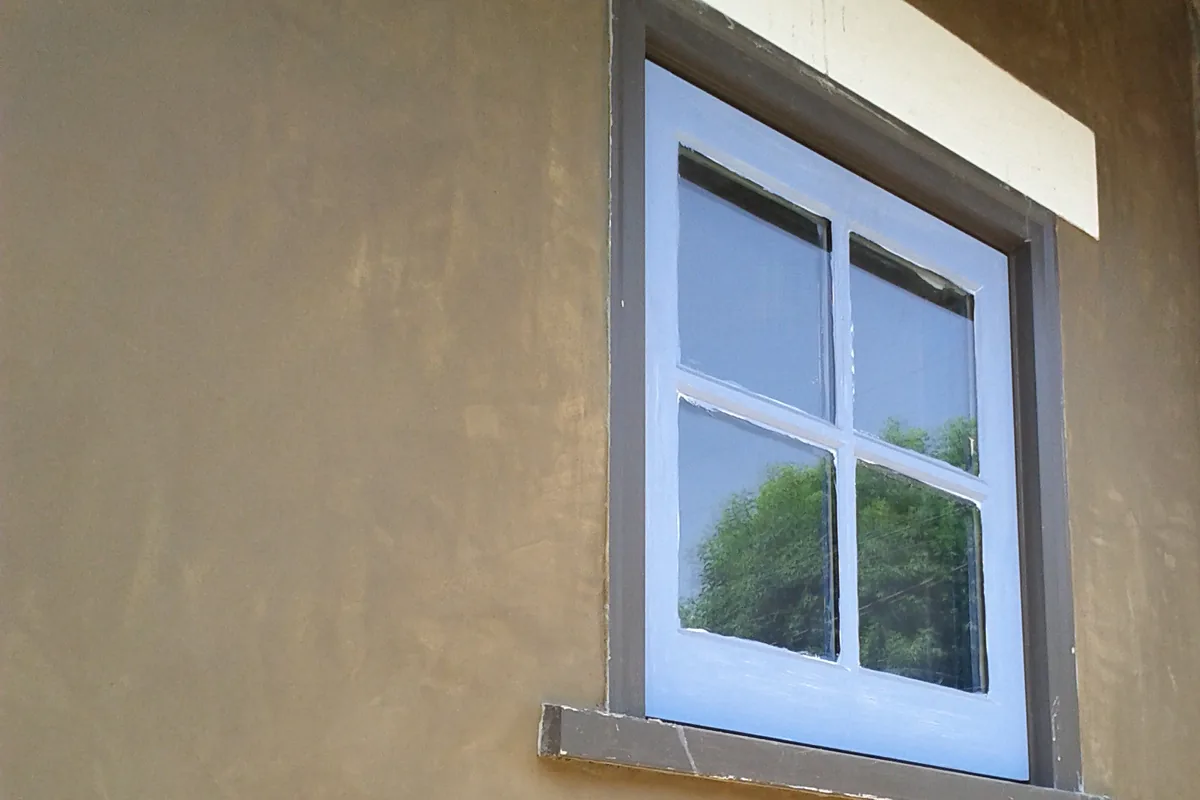
Patching stucco after a window replacement
A full-frame replacement takes the old window out with its nailing fin, which means cutting the stucco back around the opening. Putting that band back is a small version of new stucco on a framed wall, and the order matters more than the plaster:
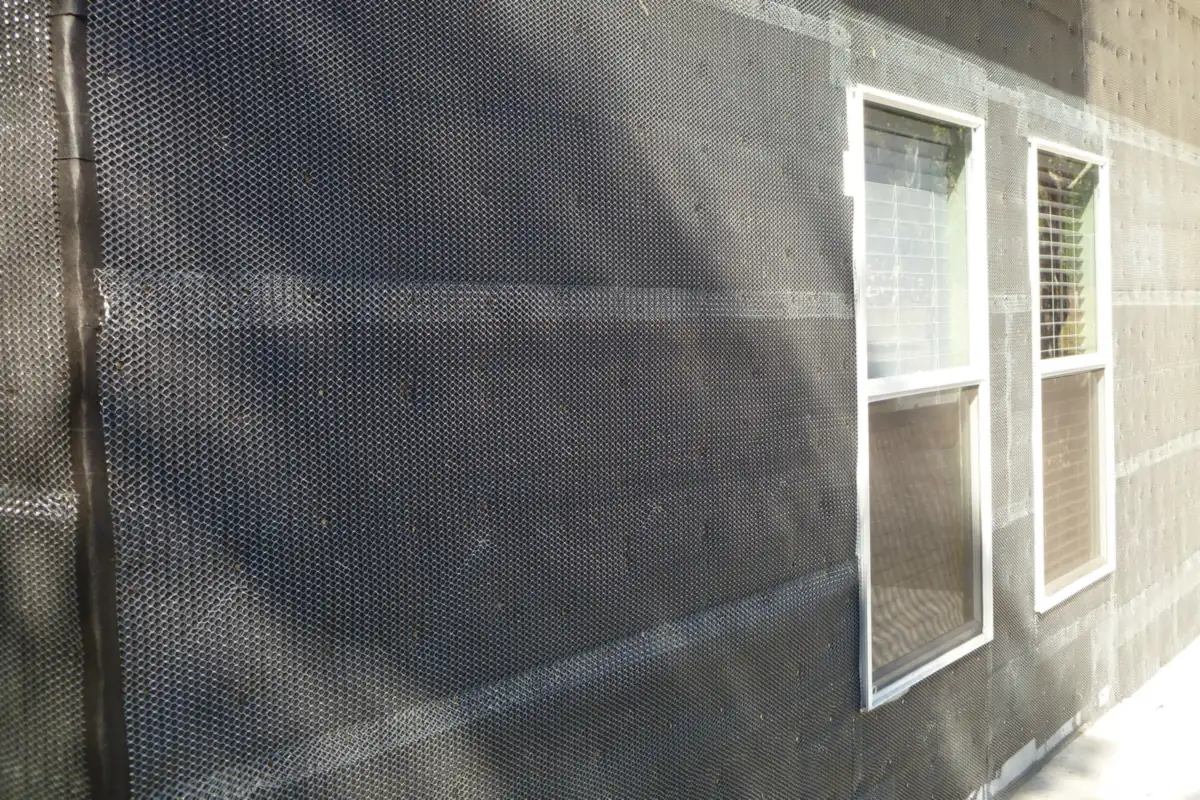
- The new window's flashing tapes and the building paper are lapped so the layer above always overlaps the layer below.
- New lath is fastened and tied into the old lath so the patch and the wall move together.
- A casing bead or similar accessory stops the stucco at the frame, leaving a joint for sealant rather than plaster jammed against the window.
- The coats are built back to the full thickness of the wall, not just skimmed over, so the patch doesn't crack along its edge.
Why the patch shows, and how it stops showing
A band of new finish around each window frames it in a fresher color. The WCC's crack bulletin says to refinish the entire panel to keep a repair from leaving a scar, and that applies here too: once all the windows on a wall are patched, the wall gets one new finish coat from corner to corner. The stucco patch repair page covers texture matching.
Window-corner cracks and leaks
The diagonal crack from a window corner is the most common stucco crack on any house; TSIB and WCC both call it a re-entrant crack and recommend control joints at those corners. A corner crack is cosmetic until water uses it. Dark staining under the sill, soft stucco or a damp interior wall below the window mean the flashing has failed, and the job moves to water damage repair. Otherwise it's a crack repair.
How stucco is patched around a window
- 1Square up the cut
After the new window is set, the ragged stucco edge around the opening is cut back to a clean, sound line.
- 2Lap the flashing and paper
The window's flashing and the building paper are lapped shingle-fashion: upper layers over lower ones, so water running down the wall stays on the outside.
- 3Lath and casing bead
New lath is tied into the old and a casing bead or other accessory gives the stucco a clean stop at the window frame, leaving room for sealant.
- 4Rebuild the coats
Scratch and brown coats fill the band around the window to the plane of the wall, each coat allowed to firm up and kept from drying too fast.
- 5Finish and seal
The finish coat is matched to the wall's texture, the wall panel is refinished to hide the band, and the frame joint gets a compatible sealant.
Window frame colors and replacements can need HOA approval (the HOA guide has Power Ranch's rule), and the Gilbert stucco permit guide explains who to ask about the Town. Foam bands around windows are repaired on the foam trim page.