EIFS vs stucco in Gilbert AZ: synthetic stucco vs hard coat
From the street they look alike; up close they're different materials with different codes, costs and weak spots. The comparison that matters to a Gilbert owner:
| Traditional (hard coat) stucco | EIFS / synthetic stucco | |
|---|---|---|
| What it is | Portland cement, lime, sand and water in coats over paper and lath, or straight onto block | Foam insulation board, a base coat with reinforcing mesh, and an acrylic finish |
| Thickness | About 7/8 in over lath (ASTM C926) | Mostly foam; the coatings are thin |
| Feel and sound | Hard and solid when tapped | Slightly soft, hollow when tapped; dents |
| Installed cost | $6.36 to $9.66 per sq ft | $10 to $18 per sq ft |
| Insulation | Little | Continuous foam; This Old House says it can stop air leaks by up to 55% |
| Code section (IRC) | R703.7 Exterior plaster | R703.9 EIFS and EIFS with drainage |
| Typical damage | Cracks, especially at window corners | Dents, failed sealant joints, wet foam behind the finish |
Materials and cost: This Old House stucco siding cost guide (2026) and Bob Vila's stucco repair guide; thickness: ASTM C926 Table 4; code sections: IRC R703.7 and R703.9 (EIMA summary).
Foam trim: the EIFS most Gilbert houses actually have
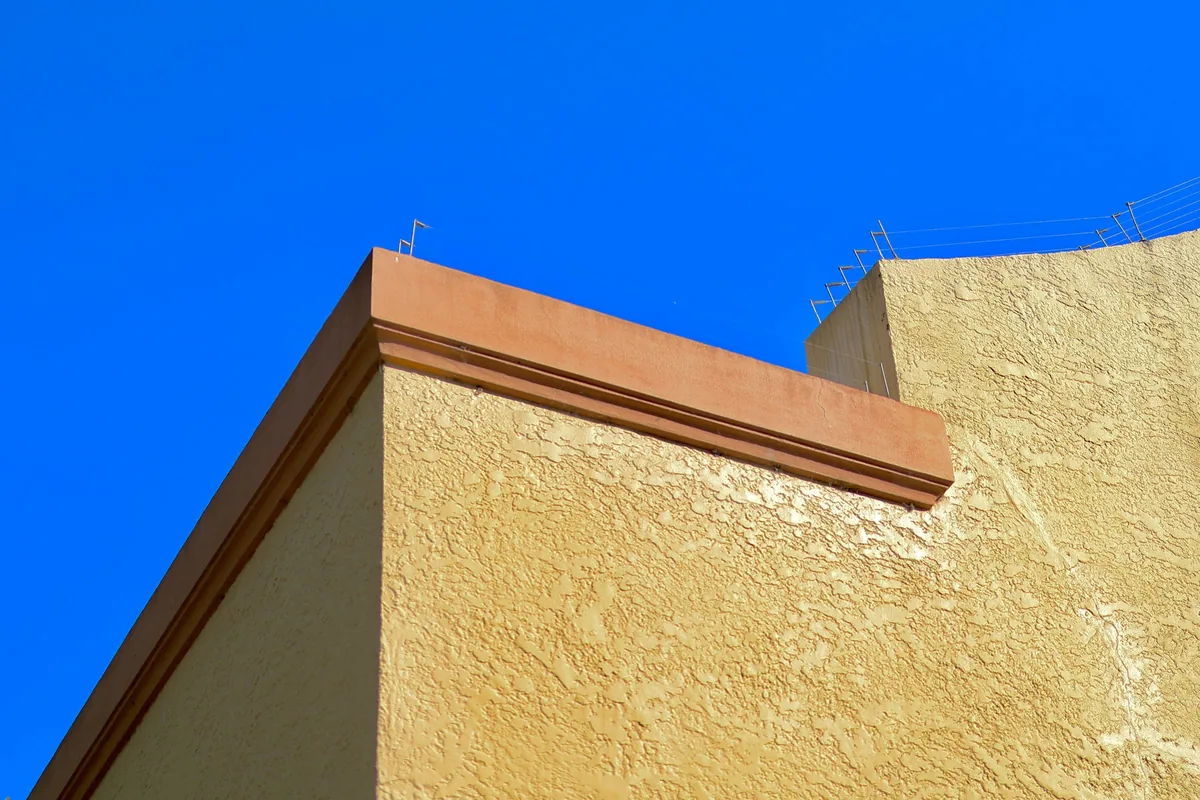
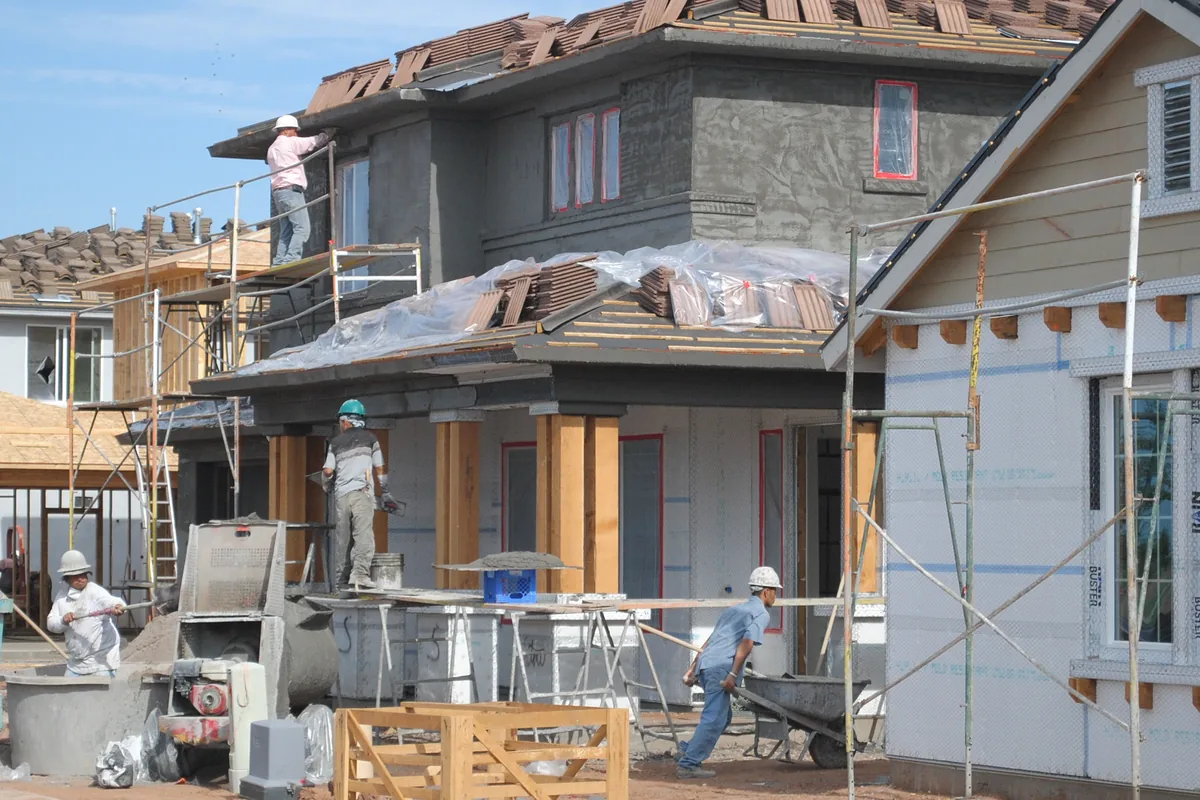
On many Gilbert houses, the raised bands around windows, the sills, the cornice at the roof line and the parapet caps are foam shapes finished with a base coat, mesh and finish: a small piece of EIFS on a cement stucco house. That's why a "stucco" trim band dents when a ladder hits it and sounds hollow when tapped. It's repaired with foam, mesh and finish, not cement; the EIFS and foam trim repair page covers how.
Acrylic finish over cement is not EIFS
Some cement stucco walls carry an acrylic (synthetic) finish coat instead of a cement color coat. The wall underneath is still cement over lath, so it behaves like hard-coat stucco; only the top layer is synthetic. That matters for repairs: an acrylic finish is patched with acrylic, and a cement color coat won't bond over it.
How to tell which one your wall is
- Knuckle test: cement stucco knocks like a sidewalk; EIFS knocks like a hollow box.
- Thumb test on a hidden spot: EIFS gives slightly and a fingernail marks it; cement stucco doesn't move.
- Look where something broke the surface: white or gray foam means EIFS or foam trim; a gray cement layer with wire means hard coat.
- Look at the bottom edge: EIFS with drainage must end at least 6 inches above finished ground under IRC R703.9.2.
- Check the house's records: a builder's spec, an inspection report from the purchase, or the permit file.
How each one fails
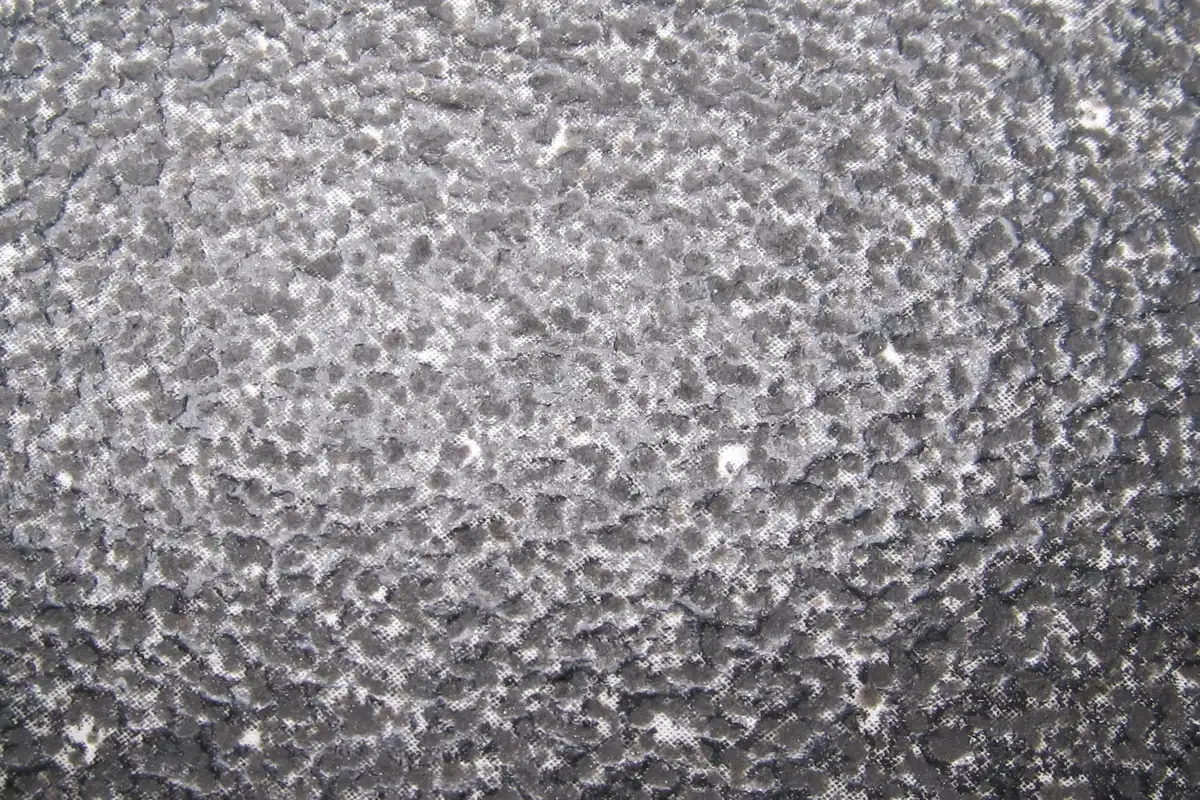
Cement stucco fails by cracking. The TSIB bulletin lists the stresses, from shrinkage and settlement to thermal expansion and contraction, and names the corners of windows and doors as the usual crack line; most cracks are hairline and cosmetic. EIFS rarely cracks that way, but it dents, and its weak points are its joints: where the finish meets a window frame, a roof line or a penetration, sealant holds the water out, and when that sealant fails water can reach the foam and the sheathing behind it without showing on the face. Current codes answer that with drainage: EIMA summarizes the IRC as requiring EIFS with drainage to meet ASTM E2568 and drain at least 90 percent of test water under ASTM E2273.
Gilbert conditions
Gilbert's sun and heat age the sealant at both systems' joints, and the June 15 to September 30 monsoon tests every joint with wind-driven rain. For a cement wall that means checking cracks after each summer; for EIFS and foam trim it means checking sealant and the flat tops where rain sits. Signs of water either way are on the water damage page, and the stucco lifespan guide covers the climate.
Repairing, recoating and adding on
Match the system: patch cement with cement and EIFS with foam, mesh and acrylic. New work on a cement stucco house, such as an addition, is usually built in cement stucco to match; see the new stucco page. Small cement patches and texture matching are on the patch repairpage. If you're buying a house with full EIFS walls, a moisture inspection by an EIFS inspector is worth the cost; This Old House puts a stucco inspection at $100 to $500.